But to Marketers and Advertisers and to Dr Alan Grant from Jurassic Park "A Child is a Small Adult"
Who knew that the key to the world of marketing could be so easily handled and easy to break through............ how i here you say? Children have slowly become the gateway for adult consumers to part with their hard earnt cash.... Just by putting the right product in front of children they instantly want it..... UNBELIEVABLE!!
Piaget "conepts formed are crude and irreverible" he further goes on to say "perceptions dominate judgement" baring mind that these comments were made at the age group between 4 and 7 they are critical ages as this is when children according to reasearch are at their most influencial.
Children represent three different markets. In addition to the direct money that children spend and the money they influence, children also represent a third major market and perhaps the most significant and that is the future market. Advertisers and Mareters recognise that brand loyalties have formed,whilst children are young and vulnerable these brands will be carried through to adulthood,althought deep down inside everyone is just a big kid.
Retailers and manufacturers have two sources of new customers, those who they can persuade to change from their competitors (THE ADULTS) and those who have not yet entered the market yet (THE CHILDREN). Those who switch are less likely to be loyal than those who are catered for from childhood, according to the CEO of Prism Communications M. McNeal "they aren't children so much as what I like to call `evolving consumers'." The following definitions of age were made by McNeal about the evolution satges of cild consumers.
From age 1: Accompanying Parents and Observing. Children are taken with their parents to supermarkets and shops where all sorts of goodies are displayed.
By the time a child can sit erect, he or she is placed in his or her culturally defined observation post high atop a shopping cart. From this vantage point the child stays safety in proximity to parents but can see for the first time the wonderland of marketing.
From age 2: Accompanying Parents and Requesting. Children begin to ask for things that they see and make connections between television advertising and store contents. They pay more attention to those ads and the list of things they want increases.
At the same time, the youngster is learning how to get parents to respond to his or her wishes and wants. This may take the form of a grunt, whine, scream, or gesture--indeed some tears may be necessary--but eventually almost all children are able on a regular basis to persuade Mom or Dad to buy something for them.
From age 3: Accompanying Parents and Selecting with Permission. Children are able to come down from the shopping trolley and make their own choices. They are able to recognise brands and locate goods in the store.
At this point the child has completed many connections, from advertisements to wants, to stores, to displays, to packages, to retrieval of want-satisfying products. For many parents this is a pleasing experience. Ditto for the marketers, for it signals the beginning of the child's understanding of the want-satisfaction process in a market-driven society.
From age 4: Accompanying Parents and Making Independent Purchases. The final step in their development as a consumer is learning to pay for their purchases at the check-out counter.
From age 5: Going to the Store Alone and Making Independent Purchases.
According to Direct Marketing magazine, by the age of eight children make most of their own buying decisions.
Modern children can often recognise brands and status items by the age of 3 or 4, before they can even read. One study found that 52 percent of 3 year olds and 73% of 4 year olds "often or almost always" asked their parents for specific brands. Advertisers recognise that brand loyalties and consumer habits formed when children are young and vulnerable will be carried through to adulthood. Kids `R' Us president, Mike Searles, says "If you own this child at an early age... you can own this child for years to come."
Have a look at what is being marketed to kids now.....
JUNK
TOYS
CARS?!?!?
Cars i can hear you shouting now!! Yes cars look at how the children are used to be like adults,they are the ones unpacking the cars,they are the watching the children sorry "Adults" playing. The use of this is so clever it works on so many different levels,one of them is showing how the children apparently made the decision for their parents to buy the Car how funny does that happen in real life? I believe it does, i believe that when buying a car fr your familt it has to be an all rounder,remember the "KIDS COME FIRST" on that decision,so sub conciously they are making the decision to buy the car. maybe there are too many points to write about now,but i hope you can see what i am trying to get at by showing that advert.....? Tom McGee and Kevin Heubusch did studies into this specific area "one study estimated that children influenced $9 billion worth of car sales in 1994. One car dealer explains: "Sometimes, the child literally is our customer. I have watched the child pick out the car."
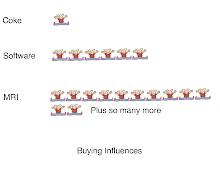
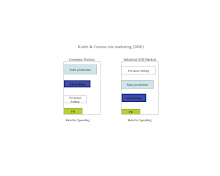
Below is a chart that is taken from Laurie Klein this study was done in 1997 there is also a link to a story in a Newspaper about pocket

Paper
I have reached the conlusion that Children have to much POWER Adults need to start learning to say NO!!
Please have a look at my previous blog entitled My Family......... and click the link "Children Rule The Roost" enjoy




1 comment:
A really good read that demonstrates wide research and in-depth understanding - thanks
Post a Comment